Printing Shirts for Your Business: Which Method Holds Up Best After Repeated Washes?
If you're printing shirts for a business — staff uniforms, branded merch, wholesale apparel — the quality of the decoration on delivery is only half the equation. The other half is how it looks after 50 washes. For shirts that represent your brand every time they're worn, durability isn't a secondary consideration. It's the whole point.
Not every printing method ages the same way. Here's how the main techniques compare on durability — and what each one means for your margin when you're buying in volume.
Why Print Durability Matters More Than It Seems
A shirt that cracks, fades, or peels after a few months of wear doesn't just look bad. It signals something about the brand behind it — that quality wasn't a priority, or that corners were cut somewhere. For corporate apparel, retail merchandise, and team uniforms that get washed and worn regularly, the decoration needs to hold.
The durability question is also a cost question. A cheaper per-unit method that requires replacement after one season is rarely cheaper over time. The margin on your product or program is affected not just by what you pay per shirt, but by how long each shirt stays in circulation.
Screen Printing — The Durability Standard
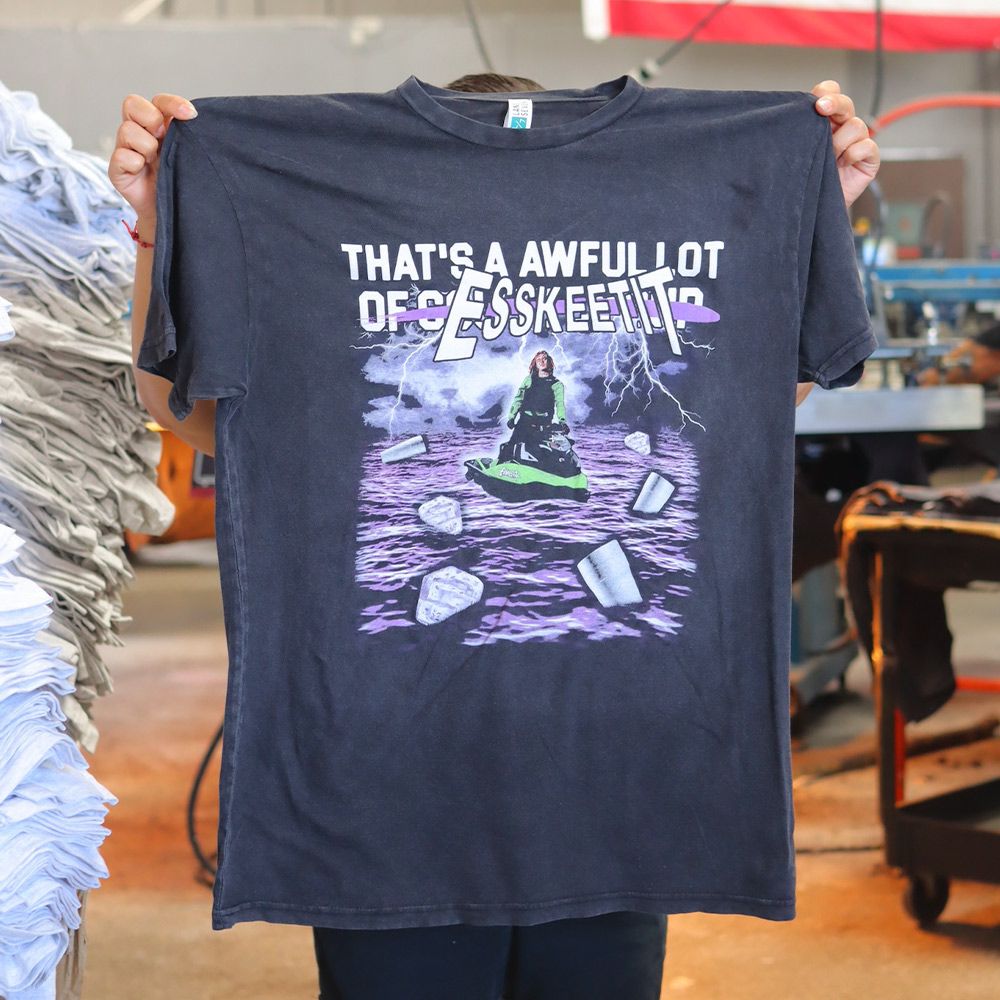
Screen printing is the most durable clothing decoration method available at scale — and the most cost-efficient at volume. Ink is pressed directly into the fabric fibers through a mesh screen, layer by layer, and cured at high heat (around 320–330°F) to permanently bond it to the garment. When done correctly, screen prints don't crack, peel, or fade under normal washing conditions. They outlast most other decoration methods — and in many cases, they outlast the garment itself.
The durability advantage comes from the curing process. Plastisol inks cure into a solid film that's bonded to the fabric surface. Water-based inks absorb into the fibers. Both, when properly cured, produce prints that hold up through extended wear and repeated washing — significantly better than heat transfers or DTF, which sit on top of the fabric rather than bonding to it.
On the pricing side, screen printing's economics improve sharply with volume. Setup costs (screens, separations, press setup) are fixed — the same whether you print 50 shirts or 500. As quantity increases, those costs spread across more units and the per-unit price drops. For businesses running regular shirt programs at 100 pieces or more, the per-unit cost of screen printing typically beats every other decoration method at equivalent quality.
Screen printing also supports specialized techniques that extend its visual range without sacrificing durability: simulated process for photorealistic and gradient-heavy artwork, jumbo printing for full-torso oversized designs, and puff printing for tactile 3D graphics — all with the same durability profile as standard screen printing.
Embroidery — Superior Durability, Higher Cost Per Unit
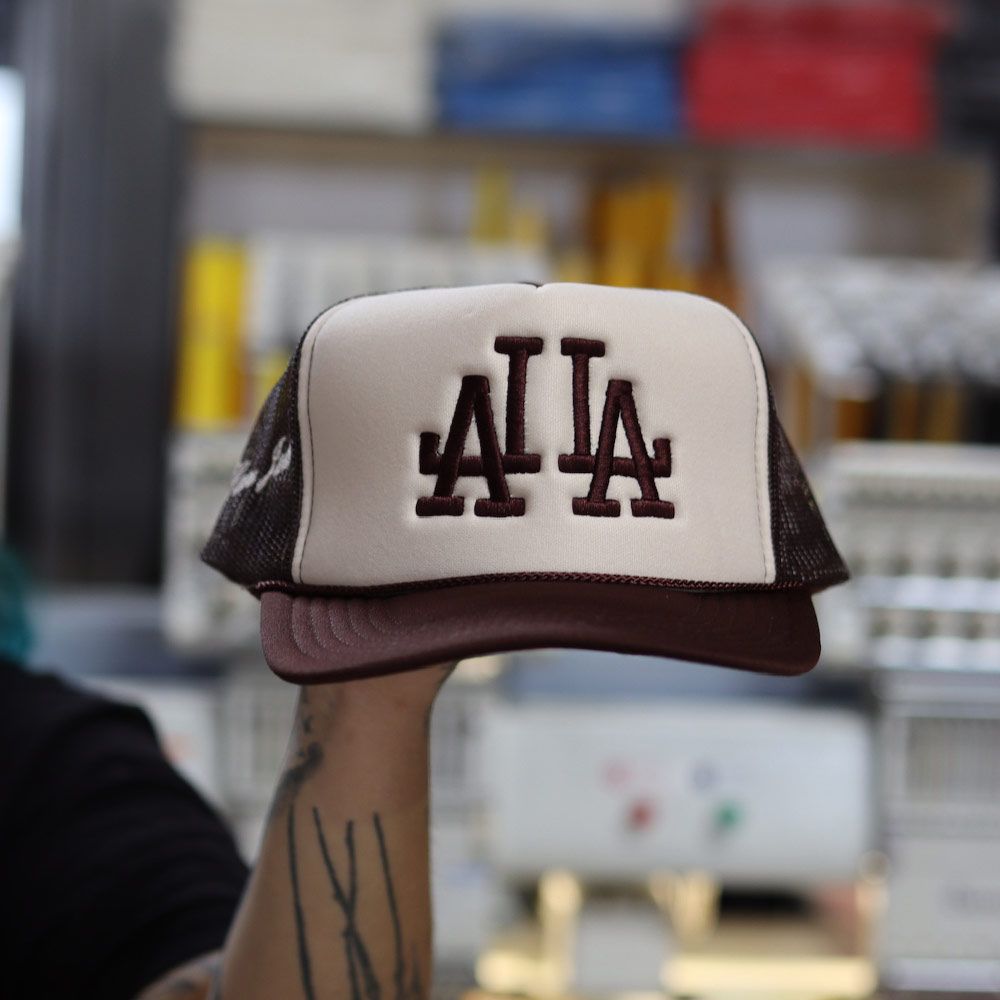
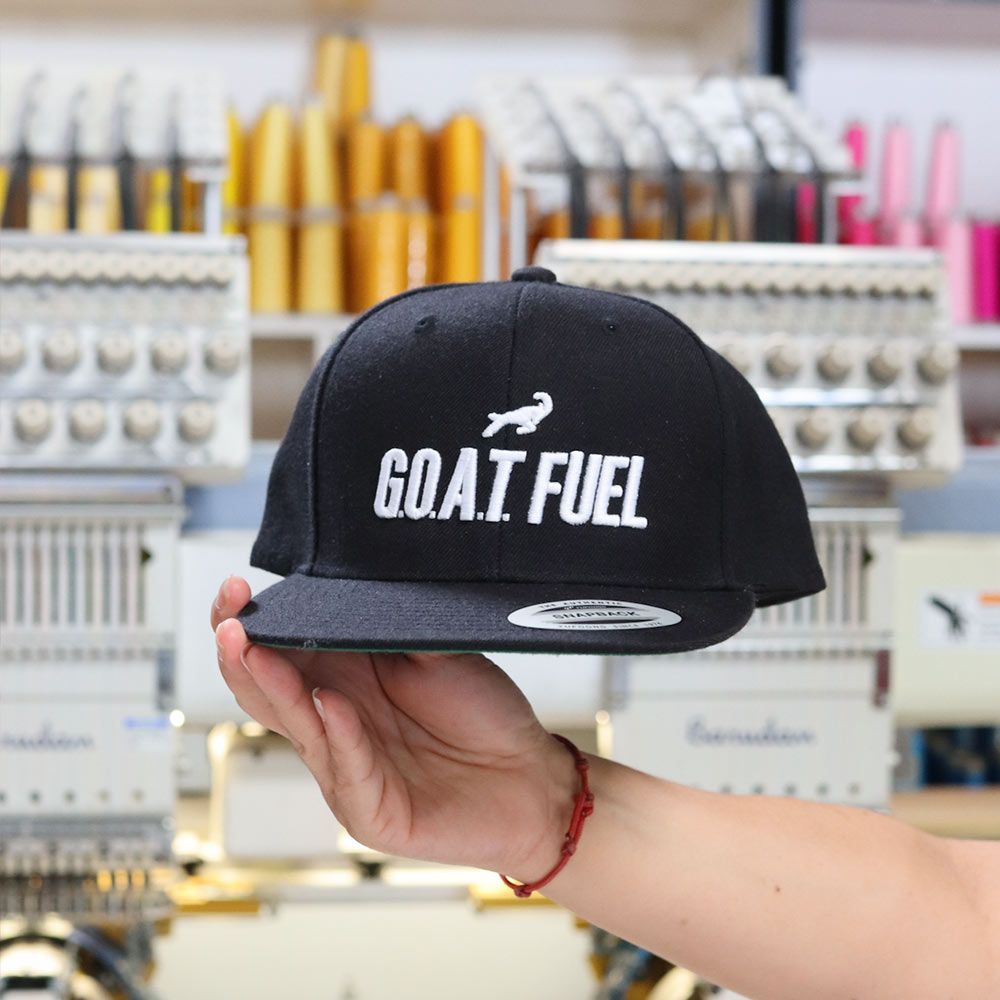
Embroidery stitches thread directly into the fabric, making it the most permanently durable decoration method available. There's nothing to crack, peel, or fade — the design is physically part of the garment. For structured apparel like polos, caps, and jackets that see heavy, repeated use, embroidery outlasts every other method.
The trade-off is cost per unit, which runs higher than screen printing at equivalent quantities. Embroidery is the right call for corporate programs and premium branded apparel where the elevated look and permanence justify the price. For high-volume T-shirt programs where margin matters, screen printing is almost always the better economic choice.
DTG — Good Quality, Limited Durability at Scale
Direct-to-garment printing applies ink directly to the fabric using an inkjet printhead. On 100% cotton, it produces vibrant, detailed results with no setup fees. For small runs and samples, it's a practical choice.
The durability consideration: DTG prints, particularly on dark garments that require pretreatment, can fade faster than screen prints under repeated high-temperature washing. The ink sits in the fibers rather than forming a bonded surface layer, and wash durability varies more between shops and equipment quality than screen printing does.
On the pricing side, DTG doesn't improve at volume the way screen printing does. The per-unit cost at 200 pieces is only marginally lower than at 20. For businesses printing shirts regularly at meaningful quantities, the lack of volume economics makes DTG a difficult choice to justify on margin.
DTF — Flexible but Surface-Level
DTF transfers a printed film onto the garment via heat press. It works on any fabric, handles detailed artwork, and requires no pretreatment. The durability limitation: the transfer is a film sitting on top of the fabric. With repeated washing and high heat, DTF transfers can begin to lift at the edges, particularly on garments that get frequent use. For shirts worn infrequently, the durability is acceptable. For uniforms and regularly washed apparel, it's a risk worth considering.
The Business Case for Screen Printing
For most shirt printing programs — uniforms, branded merch, wholesale apparel, event tees — screen printing wins on both durability and margin:
- Durability: Bonded ink that holds up through hundreds of washes, outlasting transfers and DTF on any regular-use garment
- Volume pricing: Per-unit cost that decreases significantly with quantity, producing margins that other methods can't match at scale
- Consistency: Identical results across a full production run, whether you're printing 100 pieces or 1,000
At Garment Decor, screen printing is our core service — run in-house on M&R Challenger automatic presses with Pantone color matching, water-based and plastisol ink options, and tiered pricing at 50, 75, 100, 150, 250, 500, and 1,000 pieces.
Request a quote and hear back within two hours, or learn more about our screen printing service.