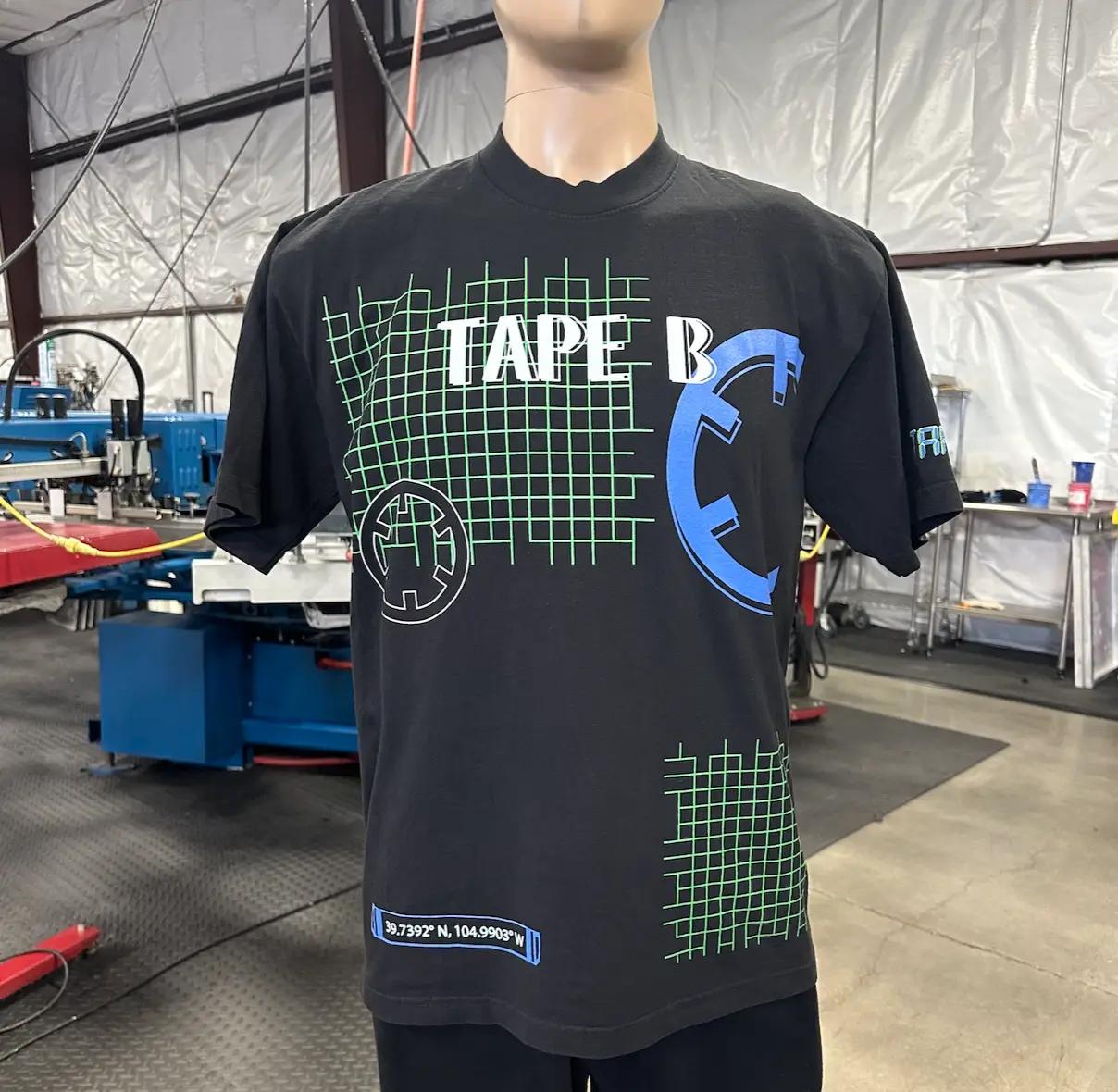
A Guide For Oversized Screen Printing: File Preparation and Large Scale Designs
Oversized screen printing is a growing trend in streetwear and custom apparel, producing bold, attention-grabbing prints that cover large areas of a garment. Whether it's a massive back print, an all-over front graphic, or a design that wraps from chest to hem, oversized prints make a powerful visual statement. But printing at this scale requires careful file preparation and an understanding of the unique challenges involved. Here's your complete guide.
What is Oversized Screen Printing?
Oversized screen printing refers to prints that exceed the standard print area (typically around 12" x 14" for a standard press). Oversized or "jumbo" prints can go up to 16" x 20" or larger, covering most of the garment front or back. This requires larger screens, wider press platens, and more precise registration — all of which demand specialized equipment and experienced operators.
The appeal of oversized printing is obvious: bigger prints create bigger impact. Streetwear brands in particular have embraced oversized prints as a way to differentiate their products, create more immersive designs, and push the boundaries of what's possible with screen printing on apparel.
File Preparation Basics
Proper file preparation is critical for oversized prints. Mistakes that might go unnoticed in a small chest logo become glaringly obvious when scaled up to fill an entire garment panel. Follow these guidelines:
- Work at actual print size — Design your artwork at 100% of the final print dimensions. If your print will be 16" x 20", your working file should be 16" x 20". This ensures you're seeing the real level of detail in your design as you work.
- Use vector artwork whenever possible — Vector files (AI, EPS, SVG) scale infinitely without losing quality. For oversized prints, this is crucial. Raster files (PSD, PNG, JPG) must be at least 300 DPI at the final print size, which means very large file sizes for oversized artwork.
- Simplify color separations — Each color in a screen-printed design requires a separate screen. More colors mean higher costs and more potential for registration issues at large scale. Keep your color count manageable and discuss separation strategies with your printer.
- Account for garment construction — Remember that garments have seams, folds, and curves. A design that looks perfect flat may distort when worn. Consider how the design will sit on the body, especially at the shoulders, sides, and hem where the garment curves away from the viewer.
- Provide clear specifications — Include exact print dimensions, placement guides, Pantone color references, and any special instructions in your file package. The more precise your specs, the closer the final product will match your vision.
Design Tips for Large Scale Prints
Designing for oversized printing is different from designing for standard-size prints. Keep these tips in mind:
- Bold, graphic elements work best — Fine details and thin lines can be difficult to reproduce consistently at large scale. Bold shapes, heavy type, and high-contrast graphics translate powerfully to oversized prints.
- Consider the garment as your canvas — Think about how the design interacts with the garment shape, color, and construction. The best oversized prints feel intentional and integrated with the garment, not like a giant sticker slapped on the fabric.
- Test your design on mockups — Use realistic garment mockups to preview your design at scale before sending it to production. Pay attention to how the design looks on different body sizes — a design that works on a medium may look very different on a 3XL.
- Mind the margins — Even with oversized printing, you need to leave some margin from the edges of the garment. Printing too close to seams, hems, or collars can cause alignment issues and an unfinished appearance.
Common Challenges & How to Avoid Them
Oversized screen printing introduces challenges that standard-size printing doesn't face. Registration — the alignment of multiple color layers — becomes more difficult as print size increases because even small shifts become more visible at scale. Ink coverage must be even across the larger area, and the garment must sit perfectly flat on the press platen to avoid distortion. Work with a print shop that has experience with large-format printing and the specialized equipment to handle it.
At Garment Decor, our jumbo screen printing services are built for oversized designs. Our wide-format presses, experienced operators, and attention to detail ensure that your large-scale prints come out sharp, vibrant, and perfectly registered every time. Reach out to discuss your oversized printing project with our team.