Apparel Decoration Methods Explained: Screen Print, Embroidery, Puff, and More
Apparel decoration refers to any technique used to apply a design, logo, or artwork to a garment or accessory. The method you choose determines how the decoration looks, how long it lasts, how much it costs at volume, and which garment types it works on.
Garment Decor offers six primary apparel decoration methods — all run in-house at our 25,000 sq ft facility in Montclair, CA. Here's what each one is, how it works, and when it's the right call.
1. Screen Printing
- What it is: Ink is pressed through a mesh screen onto the fabric, one color at a time. Each color in the design requires a separate screen.
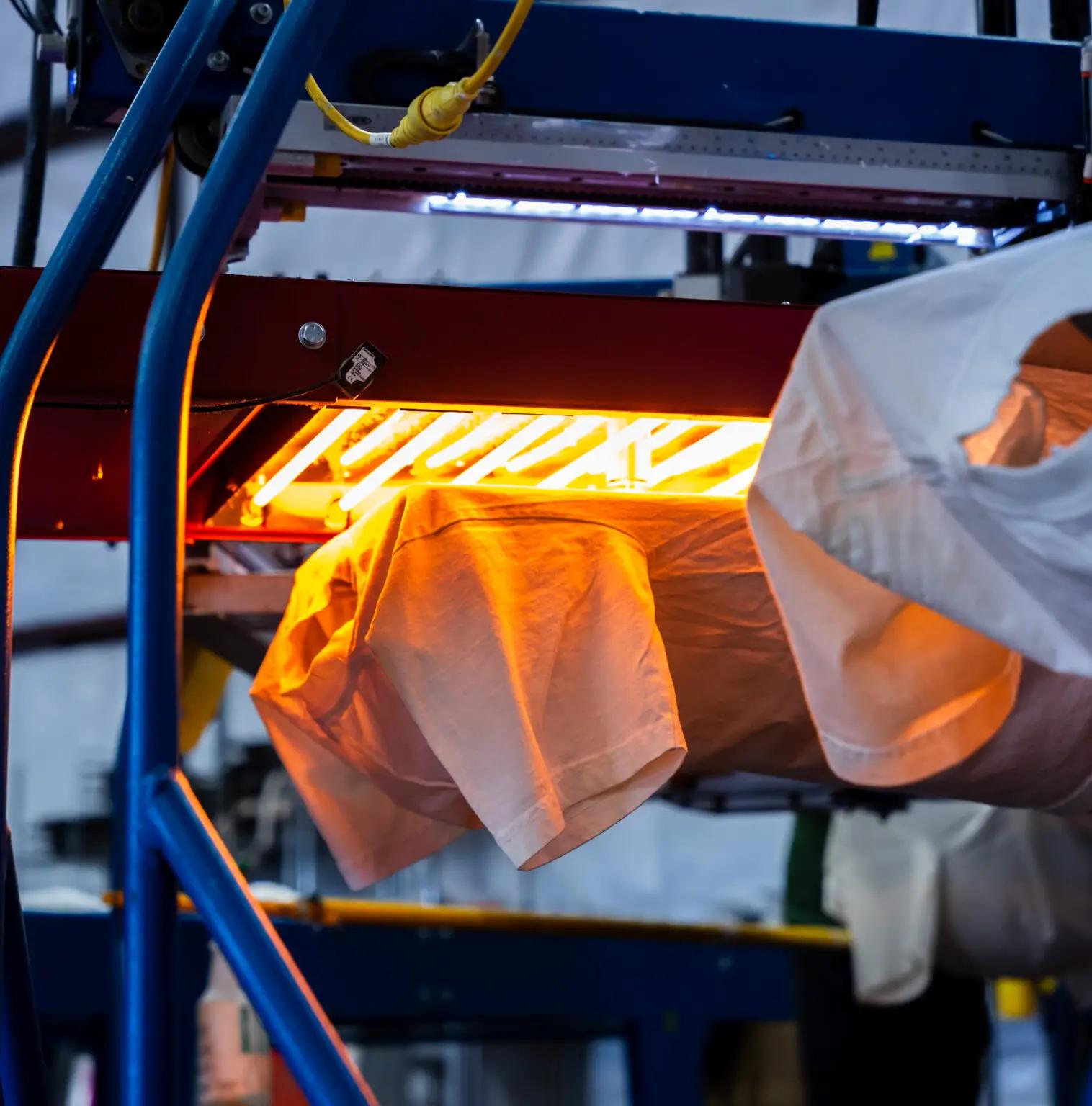
- How it works: Screens are built from your artwork, the garment is placed on a platen, and ink is pushed through the open mesh with a squeegee. After all colors are applied, the garment runs through a conveyor dryer at around 320–330°F, curing the ink permanently into the fabric.
- Best for: Bulk orders of 50+ pieces with defined color palettes — logos, wordmarks, event tees, uniforms, and promotional apparel. Cost-effective at volume because setup costs are fixed and spread across the run.
- Not ideal for: Complex gradients, photorealistic artwork, or very small runs where the per-color setup cost doesn't amortize well.
View our screen printing service →
2. Embroidery
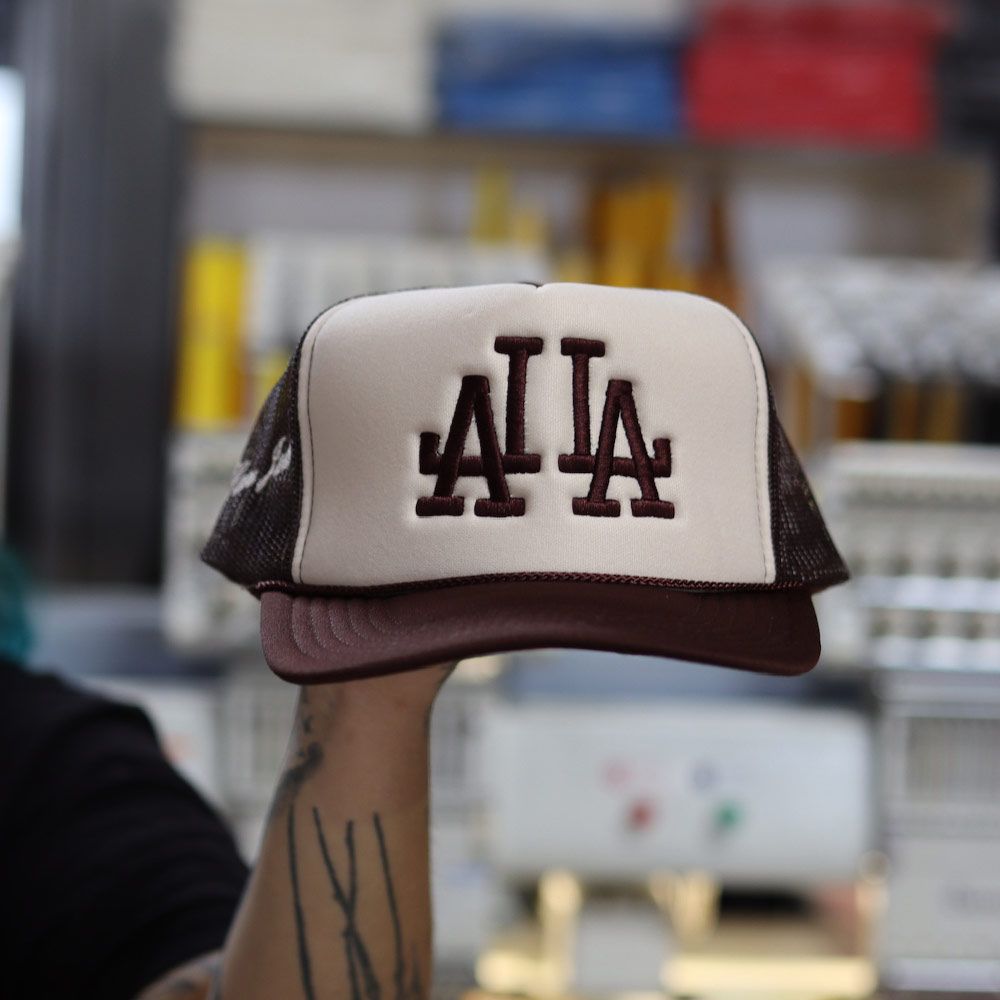
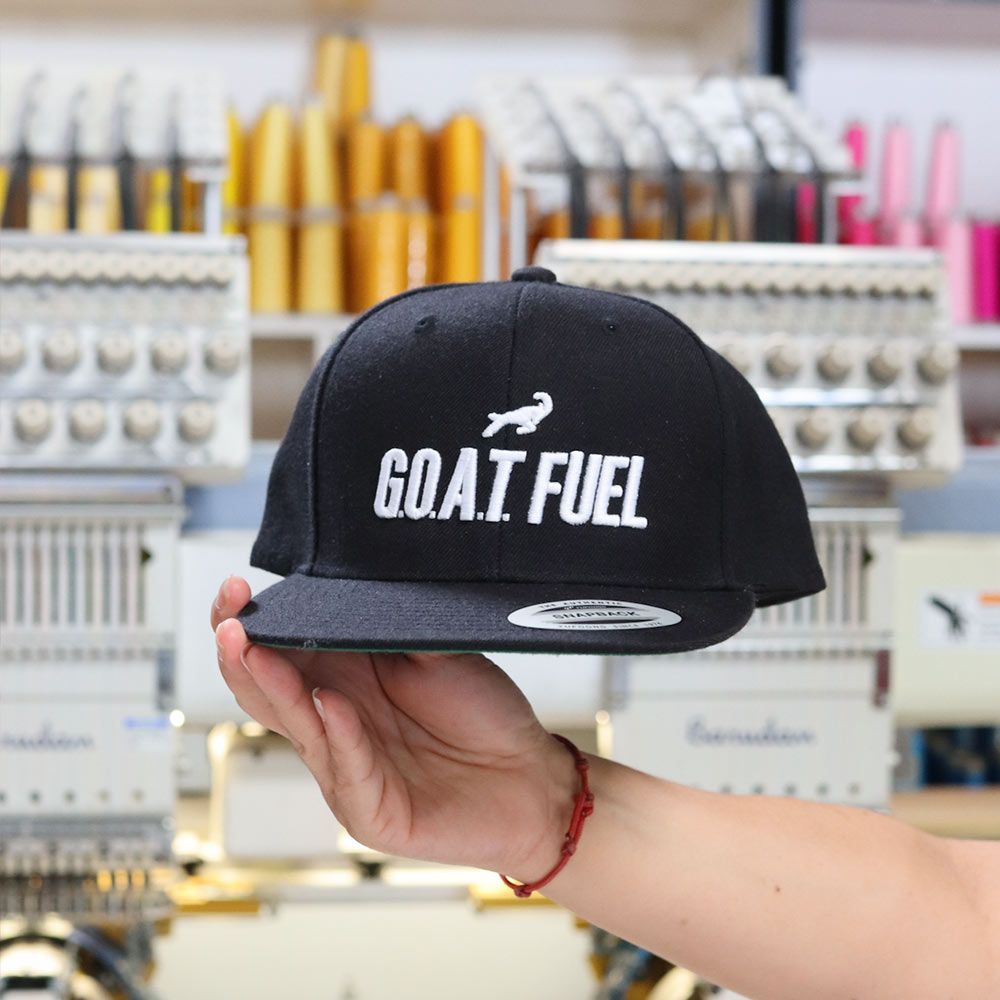
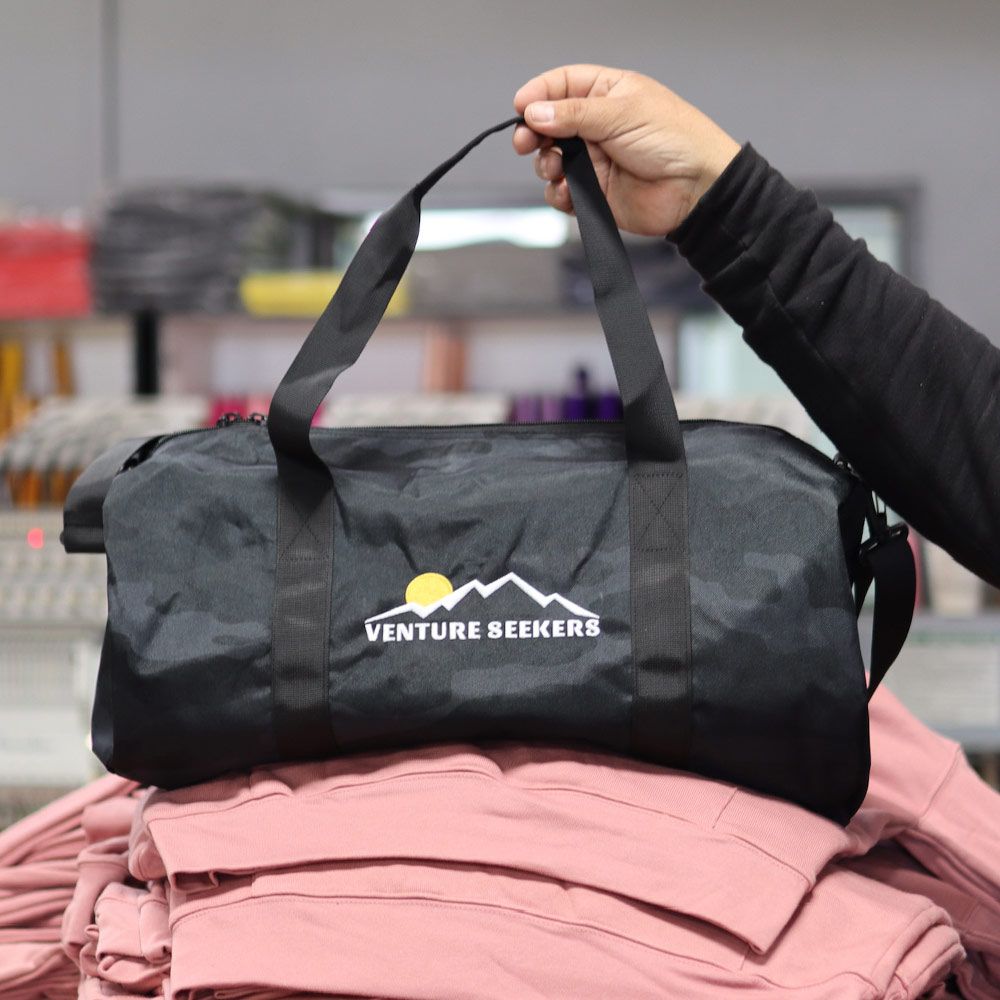
- What it is: Thread is stitched directly into the fabric by commercial embroidery machines following a digitized stitch file. The decoration becomes physically part of the garment.
- How it works: Your artwork is converted into a machine-readable stitch map (digitizing), specifying every thread placement, stitch type, and density. A physical stitch-out sample is produced before the full run. Production runs on multi-head machines that stitch multiple garments simultaneously.
- Best for: Structured apparel — polos, caps, jackets, bags, and corporate uniforms. Any program where a polished, permanent, premium-feeling decoration is required. Embroidery doesn't fade, crack, or peel.
- Variations available: Flat embroidery (thread flush to fabric), 3D puff embroidery (foam insert creates dimensional raised logo), tonal embroidery (thread matched to garment color for subtle texture effect).
- Not ideal for: Gradients, photorealistic detail, very fine text below ¼ inch, or garments where the fabric is too light to support dense stitching.
3. Puff Screen Printing
- What it is: Plastisol ink mixed with a foaming agent is screen-printed onto the garment. When the garment passes through the dryer, heat activates the foam and the ink rises — producing a raised, three-dimensional surface.
- How it works: Same screen-based process as standard screen printing, but with foam-modified ink. Curing temperature and timing are calibrated specifically for puff to ensure consistent rise across the production run.
- Best for: Bold, simple designs — block text, thick letterforms, solid logos — on cotton and cotton-blend garments. Popular in streetwear, merch drops, and fashion-forward apparel where tactile dimension is part of the product.
- Not ideal for: Fine detail, small text, gradients, or synthetic fabrics where puff adhesion is inconsistent.
View our puff screen printing service →
4. Simulated Process Screen Printing
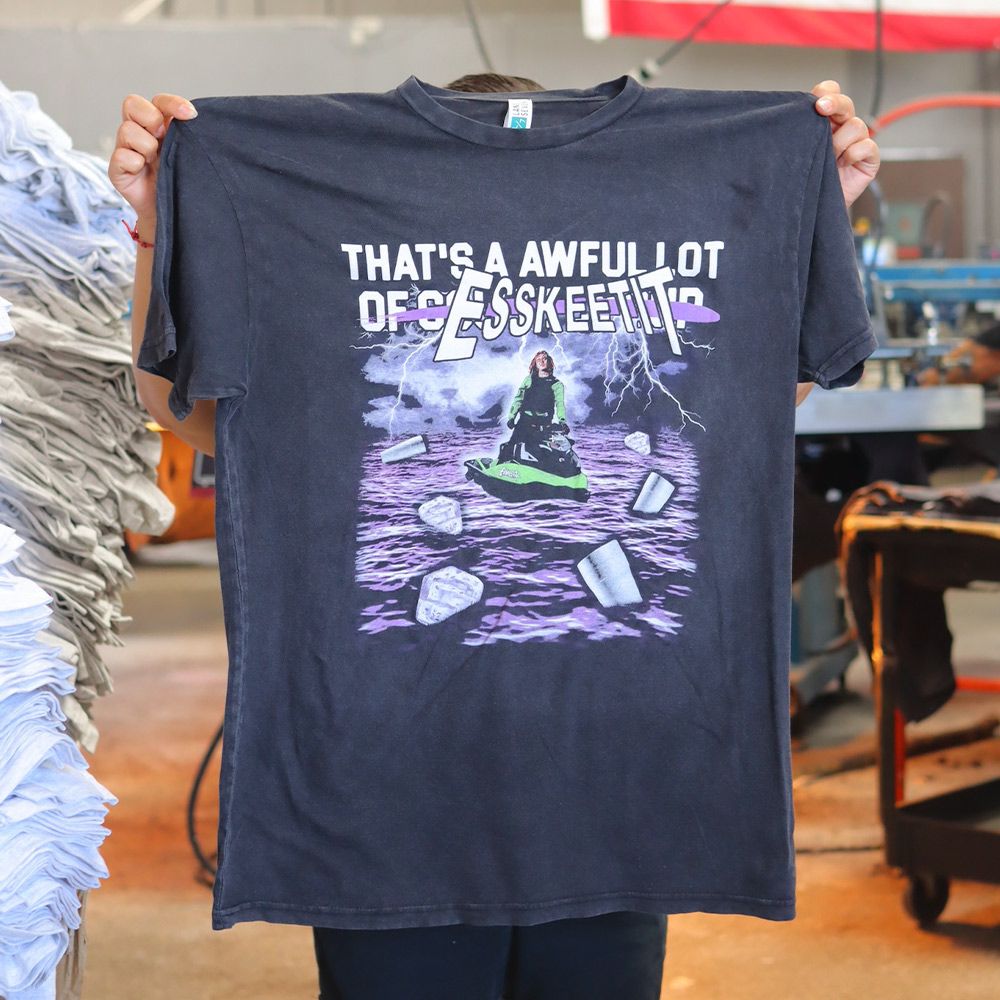
- What it is: A specialized screen printing technique that uses halftone dot patterns — small dots of ink at varying sizes and densities — to optically reproduce gradients, shading, and multi-tone color from a limited ink set.
- How it works: Artwork is separated into halftone channels using specialized film output. High mesh count screens are used to hold the fine dot patterns. Ink is layered in a specific sequence to build up the optical color mix. The result reads as smooth color gradients and photorealistic detail on the finished garment.
- Best for: Vintage-style graphics, cinematic or illustrative artwork, photorealistic designs, and any project where the color complexity exceeds what spot-color printing can reproduce. Works especially well in combination with jumbo printing for full-torso, high-detail graphics.
- Not ideal for: Very simple designs where the added setup complexity of halftone separation isn't justified.
View our simulated process service →
5. Jumbo Screen Printing
- What it is: An extended version of screen printing that uses larger screens and a longer press stroke to cover a print area significantly beyond the standard chest or back placement — up to 17" × 23".
- How it works: Same ink and curing process as standard screen printing, but run on presses specifically set up for oversized registration and coverage. Precise squeegee pressure and screen tension management are critical because any registration drift that's barely visible at 12 inches reads clearly at 17 inches.
- Best for: Streetwear brands, artist merch, and entertainment-adjacent apparel where the design is meant to fill the garment rather than sit on it. Frequently paired with simulated process printing to reproduce complex, multi-tone full-torso graphics.
- Not ideal for: Simple logos or wordmarks that don't benefit from the additional print area.
View our jumbo screen printing service →
6. Digital Screen Printing
- What it is: A hybrid decoration method that combines a traditional white underbase screen with a digital CMYK inkjet color layer printed on top — producing full-color, photo-quality output at production speed.
- How it works: A white underbase is applied through a screen first, creating a bright foundation. A specialized digital printer then deposits CMYK ink on top, rendering the full-color artwork. The garment cures in a standard conveyor dryer. No garment pretreatment is required.
- Best for: Complex, multi-color, or gradient-heavy artwork at 50+ pieces where DTG would be too slow or too expensive at volume. Runs at up to 400 garments per hour. Per-unit cost decreases with volume — unlike DTG, which stays flat regardless of quantity.
- Not ideal for: Single-piece runs or samples, where DTG remains the more practical choice.
View our digital screen printing service →
Quick Reference: Which Method for Which Project?
Garment Decor runs all six methods in-house at our Montclair, CA facility factory-direct, with a dedicated account rep on every order, a pre-production sample before any full run begins, and turnaround starting at 10 business days (rush available in 2–4 days).
Request a quote and hear back within two hours. Or browse our full services → for more information.