Clothing Printing Methods Explained: Which One Is Right for Your Project?
Clothing printing covers a wide range of techniques — and the right one for your project depends on your design complexity, order volume, garment type, and what the finished product needs to look and feel like. Using the wrong method doesn't just affect quality; it affects cost, turnaround, and whether the decoration holds up over time.
Here's a clear breakdown of the main methods, what each one is built for, and how to choose between them.
Screen Printing — The Industry Standard for Bulk Orders
Screen printing is the most widely used clothing printing method for a reason. Ink is pressed through a mesh screen onto the fabric, one color at a time, producing vibrant, opaque prints that are exceptionally durable. The setup involves creating a separate screen for each color, which makes the initial cost higher — but once those screens are built, the cost per unit drops sharply as quantity increases.
Best for: Bold logos, wordmarks, graphic tees, event shirts, uniforms — any project with a defined color palette running 50 pieces or more.
Limitations: Complex gradients and photorealistic artwork are difficult to reproduce through standard spot-color printing. Design complexity is limited by color count.
Within screen printing, several specialized techniques extend what's possible:
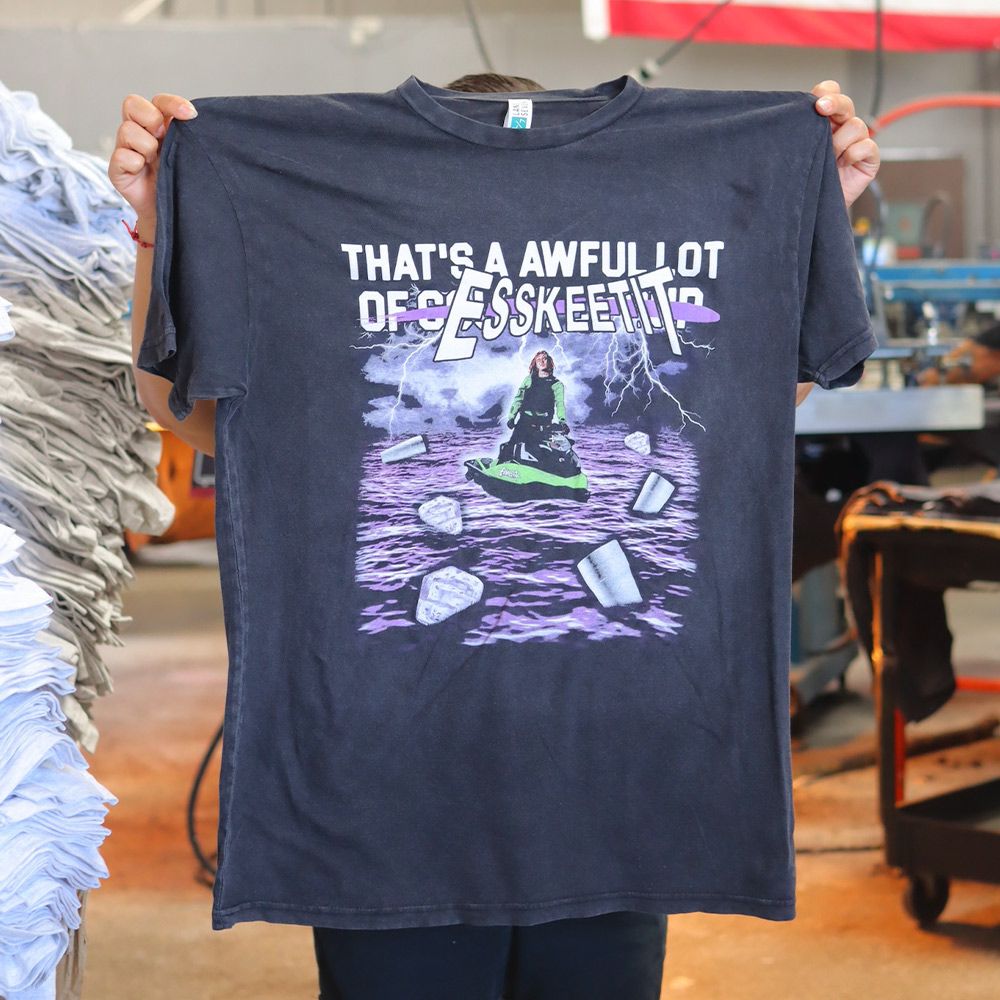
- Simulated process printing uses halftone dot patterns to reproduce gradients and photorealistic color from a limited ink set — the technique behind vintage-style graphics and multi-tone illustrations
- Jumbo (oversized) printing extends coverage across the full torso, up to 17" × 23", for designs that need to fill the garment rather than sit on it
- Puff screen printing adds a foaming agent to the ink that rises during curing, creating a raised, tactile 3D surface — popular in streetwear and fashion-forward apparel
All of these run in-house at Garment Decor on M&R Challenger automatic presses, with Pantone color matching and a pre-production sample before every full run.
Embroidery — The Premium Choice for Corporate and Structured Apparel
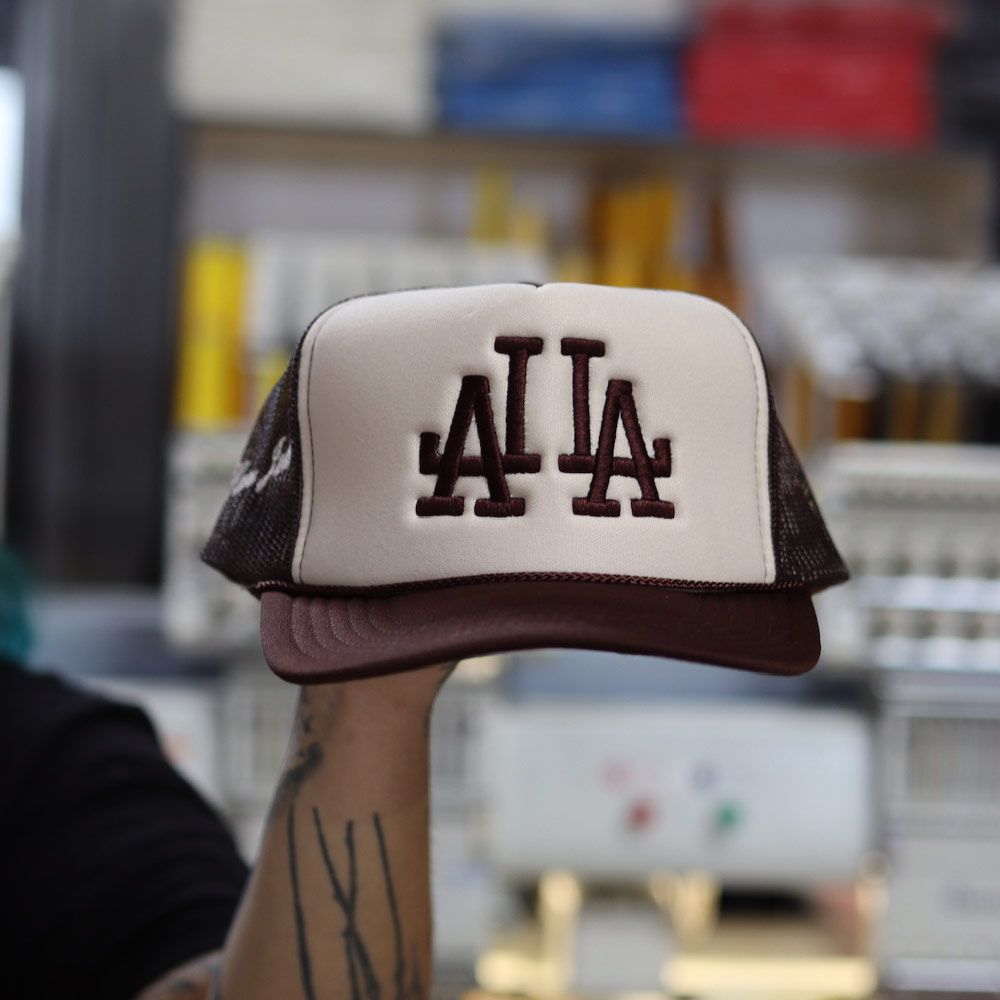
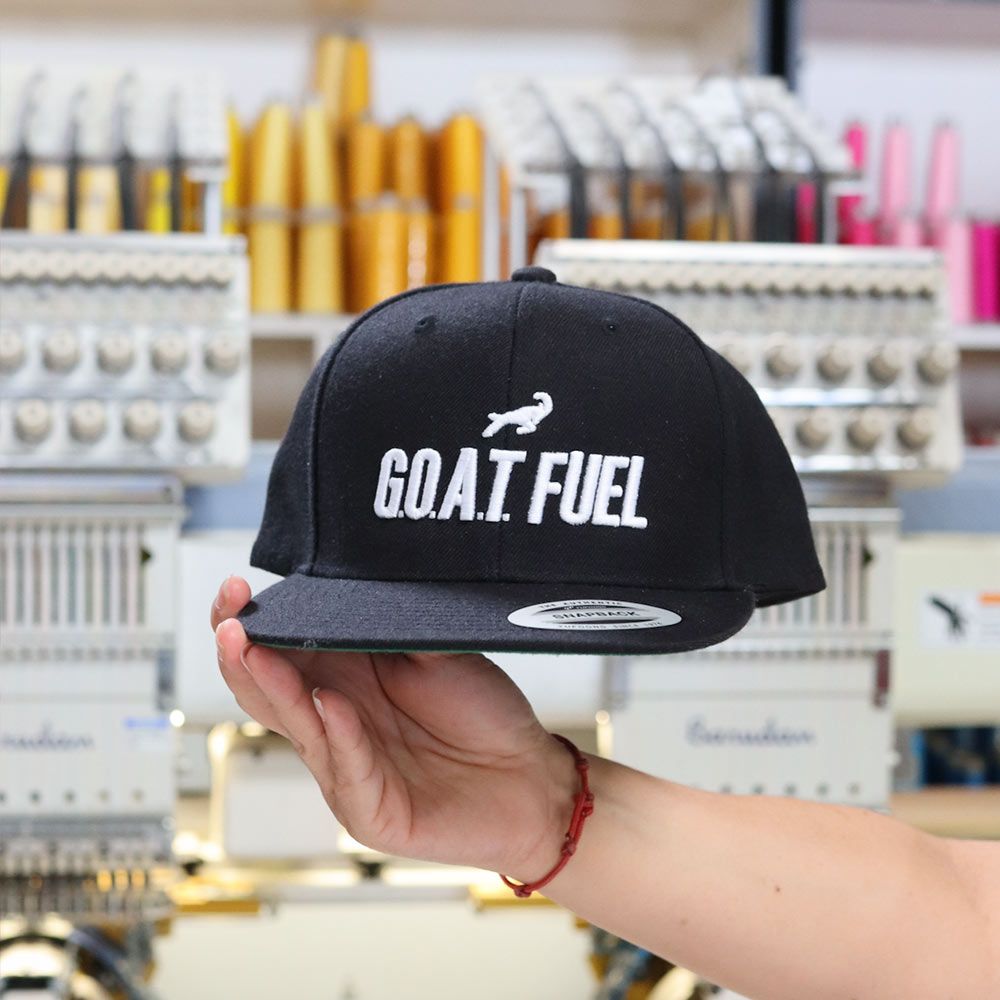
Embroidery stitches thread directly into the fabric rather than applying ink on top of it. The result is permanent, three-dimensional, and carries a visual weight that ink-based methods can't replicate. It holds its structure through years of use and repeated commercial laundering without fading, cracking, or peeling.
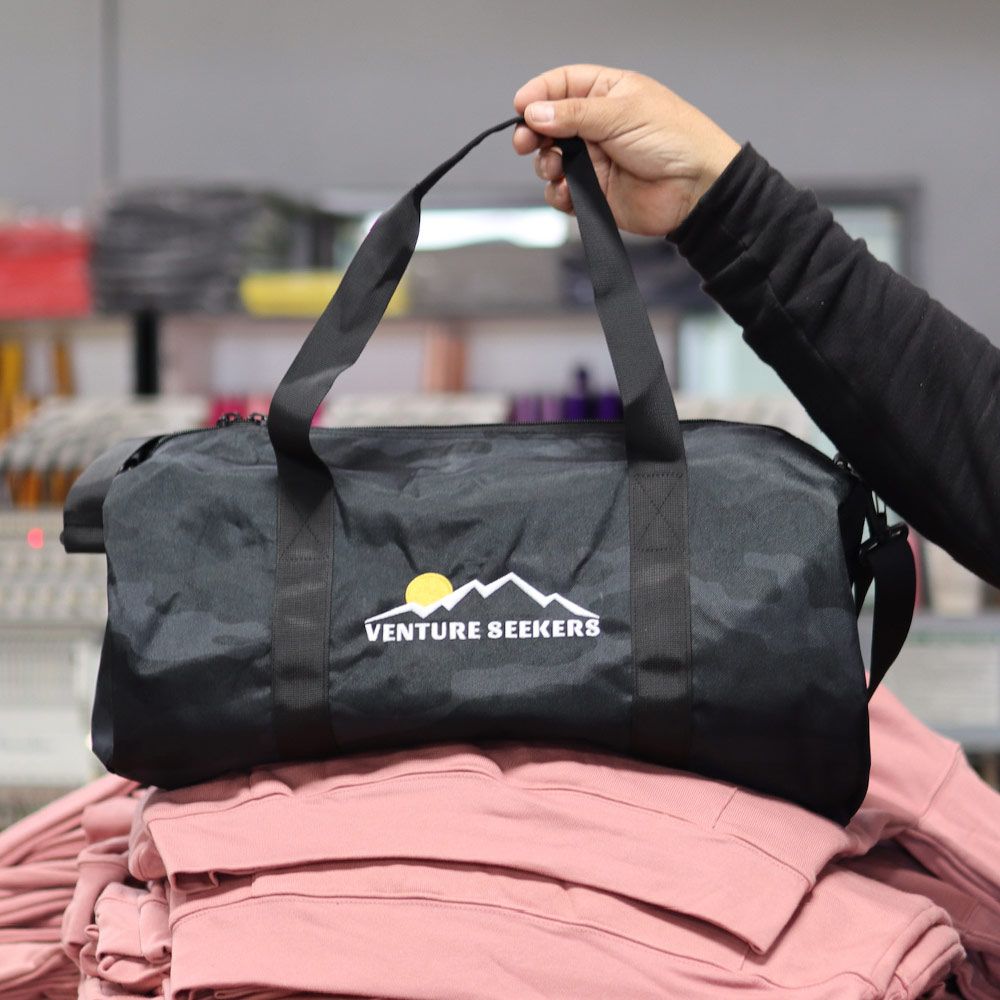
Best for: Corporate polos, caps, jackets, bags, uniforms — any structured garment where a polished, professional appearance is part of the product.
Limitations: Fine detail and gradients don't translate to thread. Small text below ¼ inch tall is difficult to stitch legibly. Embroidery has a higher per-unit cost than screen printing at equivalent quantities.
Garment Decor runs commercial-grade multi-head Barudan embroidery machines with Madeira Polyneon thread — selected for colorfastness and consistency across production runs. Both flat and 3D puff embroidery are available, starting at 50 pieces.
Digital Screen Printing — Full-Color Output at Production Scale
Digital screen printing is a hybrid method that bridges the gap between screen printing and DTG. It applies a traditional white underbase through a screen, then deposits a full CMYK color layer digitally on top — producing photo-quality, full-color output at production speeds up to 400 garments per hour.
Best for: Photorealistic designs, complex gradients, unlimited-color artwork at 50+ pieces where DTG would be cost-prohibitive.
Limitations: Performs best on light garments; results on dark fabrics, while achievable, require careful management of the underbase. Minimum 50 pieces.
Unlike DTG, digital screen printing requires no garment pretreatment, produces a soft water-based finish, and scales with volume — the per-unit cost decreases at higher quantities the same way traditional screen printing does. Garment Decor is one of the first shops in the country running this technology as a standard production option.
DTG (Direct-to-Garment) — Best for Small Runs and Samples
DTG prints directly onto the fabric using an industrial inkjet printhead. No screens, no setup fees, unlimited colors. It's the right call for one-offs, samples, and small runs where design complexity makes screen printing expensive.
Best for: 1–24 piece runs, photorealistic artwork, samples and prototypes.
Limitations: Production speed is around 50 garments per hour, which makes it expensive at higher volumes. Best on 100% cotton. Requires chemical pretreatment on dark garments.
For brands scaling past 50 pieces with complex artwork, digital screen printing is almost always a better option — lower per-unit cost, faster production, no pretreatment required.
DTF (Direct-to-Film) — Versatile but with Trade-Offs
DTF prints onto a transfer film that's heat-pressed onto the garment. It works on virtually any fabric — cotton, polyester, blends, nylon — without pretreatment, handles detailed artwork, and has no per-color setup fees.
Best for: Small runs on mixed fabric types, projects where DTG isn't suitable.
Limitations: The transfer sits on top of the fabric rather than bonding into it, creating a slightly heavier hand feel. At higher volumes, the per-unit cost doesn't improve the way screen-based methods do.
How to Choose
The decision usually comes down to three variables:
- Volume: Under 50 pieces → DTG or DTF. 50 pieces and above → screen printing or digital screen printing.
- Design complexity: Simple, bold, limited colors → spot-color screen printing. Complex, multi-color, gradients → digital screen printing or simulated process. Photorealistic at small quantities → DTG.
- Garment type: Structured apparel (polos, caps, jackets) → embroidery. T-shirts, hoodies, sweatshirts → screen printing or digital screen printing.
At Garment Decor, we offer screen printing (spot color, simulated process, jumbo, puff), digital screen printing, embroidery, and retail finishing — all in-house at our Montclair, CA facility, starting at 50 pieces.
Not sure which method fits your project? Request a quote and our team will recommend the right approach. We typically respond within two hours.